6 Min Read
Most homeowners know a big remodel needs a permit. Fewer know what the city, and the contractors pricing the job, actually need to see on paper.
In this blog, we explain what a permit set is, which Atlanta remodeling projects need permit drawings, which ones are exempt, and how to tell whether your project is ready to be drawn.
Table of Contents
- Do You Need Permit Drawings for Your Atlanta Remodel?
- What Is a Permit Set?
- Which Atlanta Remodels Need Permit Drawings?
- What's Exempt From a Permit in Atlanta?
- Historic Districts and Nearby Jurisdictions
- Do Permit Drawings Need Engineering?
- Design First, Then Draw
- Is Your Project Ready for Permit Drawings?
- How Delano Designs Prepares Permit-Ready Drawings
- Common Questions About Permit Drawings in Atlanta
Do You Need Permit Drawings for Your Atlanta Remodel?
You'll usually need permit drawings in Atlanta if your remodel changes the structure, layout, footprint, or building systems of your home, while cosmetic updates and small repairs usually don't need them.
Here's a quick way to sort it out.
Usually needs permit drawings:
- Removing, adding, or moving walls
- Changing the floor plan
- Building an addition, ADU, or new accessory structure
- Structural work, like new beams or widened openings
- Relocating plumbing, gas lines, or major electrical
- Adding or enlarging exterior windows and doors
Usually doesn't:
- Paint, flooring, and trim
- Replacing kitchen or bathroom fixtures in the same location
- Lawful repairs valued under the city's $10,000 threshold
The rest of this guide explains where those lines fall and why.
What Is a Permit Set?
A permit set is the package of scaled drawings submitted to a building department to show what exists today, what's changing, and how the new work will be built.
It turns a remodel from an idea into a documented scope of work. It also has a way of exposing unanswered layout, structural, plumbing, or electrical questions while they're still easy to solve, long before they reach the jobsite.
What the City of Atlanta Wants to See
The City of Atlanta's Office of Buildings publishes submittal checklists for residential work. Plans need to be:
-
Legible, drawn to scale, and fully dimensioned
-
Double-line drawings (single-line sketches aren't accepted)
-
Introduced with a cover sheet listing the address, owner, scope of work, and applicable codes
-
Accompanied by a site plan showing setbacks, easements, and floor area ratio when the footprint changes
-
Supported by a recent survey, when reviewers ask for one
Reviewers can also request added details or calculations before they approve a project.
Sheets in a Typical Residential Permit Set
-
Existing floor plans: the home as it stands before construction.
-
Proposed floor plans: the new layout, with dimensions, walls, doors, and fixtures.
-
Demolition plan: what's being removed or altered.
-
Elevations: vertical views of cabinetry, walls, and exterior changes.
-
Electrical and plumbing plans: the locations and changes the scope calls for.
-
Construction details: how specific conditions and assemblies come together.
-
Structural information: engineering, when the work touches structure.
Not every project needs every sheet. A bathroom that keeps its layout needs far less than a remodel that removes walls, relocates plumbing, and adds square footage.

Which Atlanta Remodels Need Permit Drawings?
The City of Atlanta commonly permits additions and alterations, accessory structures like sheds and ADUs, decks and porches, demolition, windows, roofs, and work in historic or special districts.
The exact review path depends on your scope and your property's zoning. Here's how that tends to play out room by room.
Kitchen Remodels
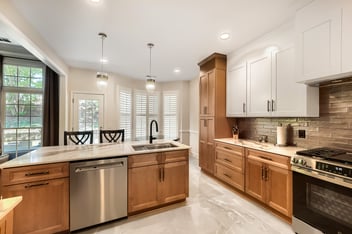
Kitchens are the most common case: moving walls, plumbing, gas, or electrical means a permit, while replacing cabinets or an existing sink in place is exempt. Our guide to kitchen remodel permits in Atlanta walks through it item by item.
Bathroom Remodels
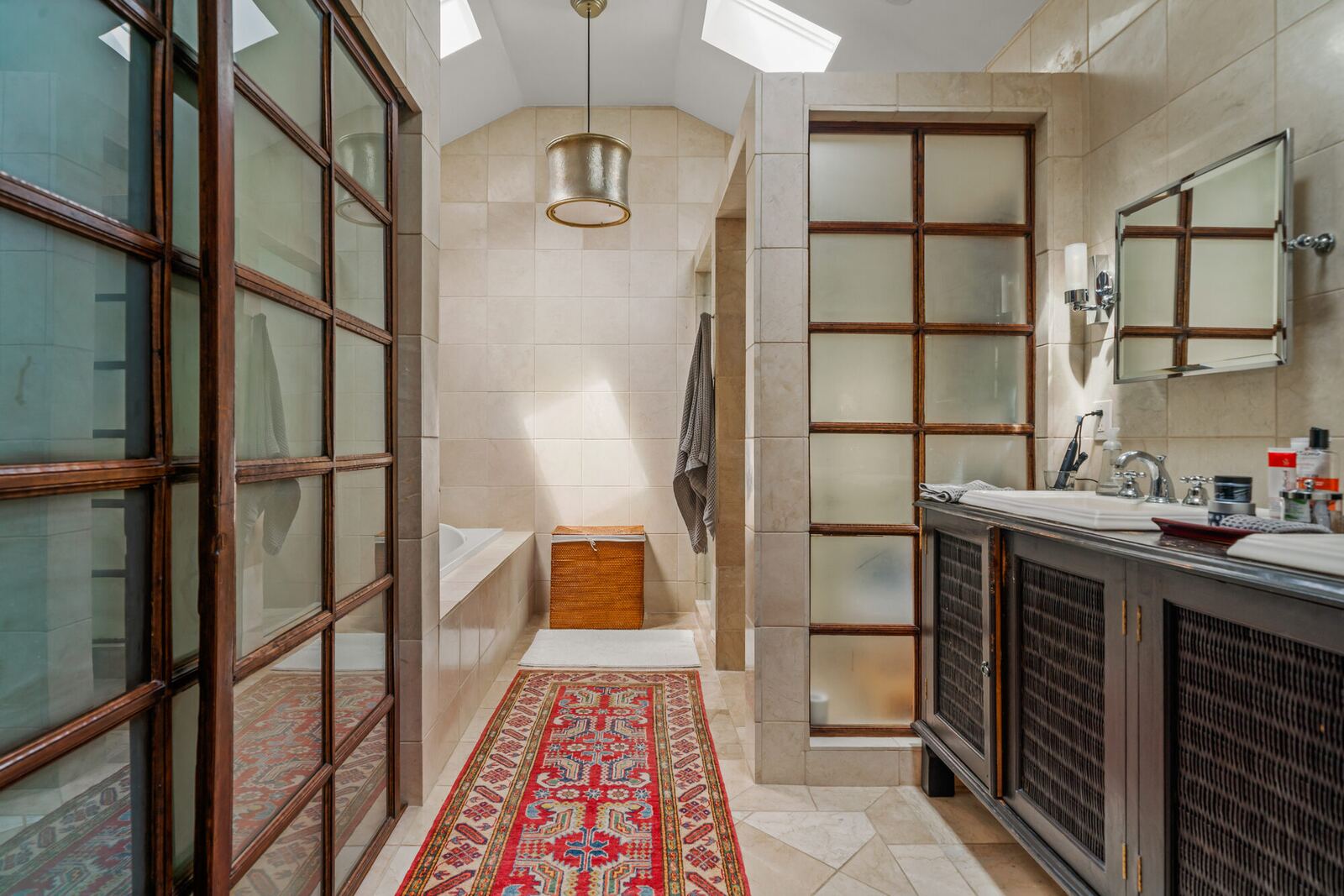
A bathroom remodel needs permit drawings when you're moving the toilet, shower, or vanity, enlarging the room, or changing walls. Swapping fixtures in place falls under Atlanta's fixture replacement exemption.
Basement Finishes
Finishing a basement creates new living space, so it's treated as an alteration and typically needs a permit. The drawings also have to address egress, ceiling height, and moisture.
Additions and ADUs
Additions and accessory dwelling units always need permit drawings, usually with a site plan, a survey, and structural information. Zoning setbacks and floor area limits shape what you can build before design even starts.
Express Lane Permits for Simpler Projects
Atlanta's Office of Buildings offers Express Lane review, often completed in about 30 minutes, for a short list of residential projects:
- Decks built to Georgia's prescriptive deck details, up to 576 square feet
- Covered porches
- Window replacements
- Re-roofs without structural changes
- Interior alterations with minor structural changes
Express doesn't mean drawing-free. It means a faster review for a simpler, well-documented scope.
What's Exempt From a Permit in Atlanta?
Atlanta doesn't require a permit for otherwise lawful repair work valued under $10,000, and it exempts certain like-for-like replacements in existing one- and two-family homes.
Those replacements include:
- Air conditioner condensers, furnaces, and related equipment
- Kitchen fixtures
- Bathroom fixtures
- Electrical outlets and fixtures
There's a catch, though. The $10,000 exemption covers repairs, not alterations, so moving a wall isn't exempt just because it's inexpensive. Exempt work still has to meet code, too. If you're unsure, confirm with the Office of Buildings before work begins rather than going by project size alone.
Historic Districts and Nearby Jurisdictions
Homes in Atlanta's historic and landmark districts need a Certificate of Appropriateness from the Urban Design Commission for most exterior changes, and that review comes before the building permit.
Neighborhoods like Inman Park, Grant Park, and Druid Hills fall under these rules. Window and door replacements, porches, decks, additions, and demolition all typically need review. Routine repair and maintenance with matching materials is handled administratively, while larger changes go to the commission.
Outside the city limits, Decatur, Brookhaven, Sandy Springs, Dunwoody, Chamblee, and unincorporated DeKalb County each run their own permitting offices, with their own checklists and review timelines. The drawings need to be built for the jurisdiction your home actually sits in.
Do Permit Drawings Need Engineering?
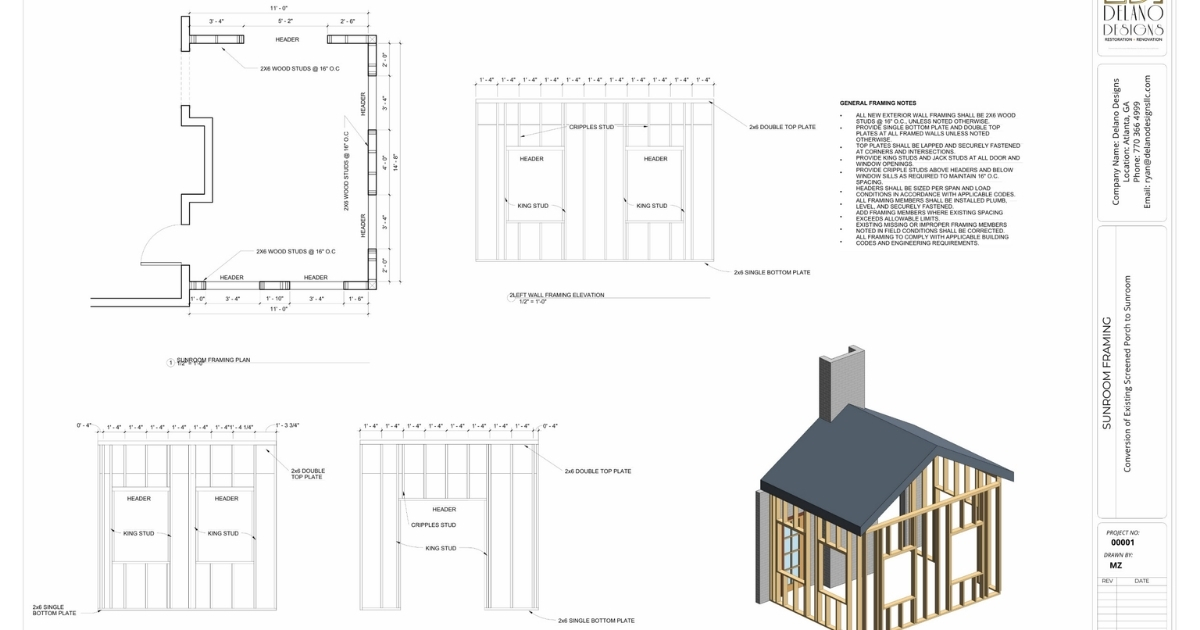
Permit drawings need engineering when the work affects structure, such as load-bearing walls, beams, foundations, or roof framing, or when the design goes beyond standard residential code tables.
Plenty of remodels never need an engineer. A kitchen that keeps its walls in place usually doesn't. But taking out a load-bearing wall to open the kitchen to the family room almost always does. When engineering applies, we coordinate with the structural engineer so their work is built into the drawing set, not stapled on at the end.
Design First, Then Draw
Permit drawings should document decisions that have already been made, not be the place where the layout gets figured out for the first time.
If the kitchen layout is still shifting, or nobody's decided which walls are moving, rushing into construction documents just means drawing things twice. Resolve the design, then document it. That sequence also hands contractors a clearer project to price, which we cover in Why You Should Complete Your Remodel Design Before Getting Contractor Bids.
Is Your Project Ready for Permit Drawings?
Your project is ready for permit drawings when you can clearly answer what's changing, what's staying, and whether structure or building systems are involved.
Run through these before you start:
- What's changing, and what's staying the same?
- Is the layout resolved?
- Are walls or openings moving?
- Are plumbing or electrical locations changing?
- Could structural work be involved?
- Does the property have zoning or historic district constraints?
- Which jurisdiction will review the permit?
If several of those answers are still fuzzy, more planning needs to happen first. That's normal, and it's far cheaper to sort out now than mid-construction.
How Delano Designs Prepares Permit-Ready Drawings
Delano Designs defines the remodel first, then turns it into a permit-ready set and manages the submission, so the drawings reflect a project that's actually been thought through.
Our studio is led by principal architectural designer Ryan Delano, and we're a design firm, not a general contractor. That means the drawings are written for whichever qualified contractor you choose, not for our own crew.
Most projects begin with the Design Jumpstart, an in-home working session that covers measurements, scope and layout, early finish direction, and a clear recommendation for what should happen next. After that, we document existing conditions with LiDAR-supported measurements, develop the full design, and produce the permit-ready set, coordinating engineers and consultants as the project requires.
We also submit the permit, track it, and respond to reviewer comments, so you aren't left translating city feedback on your own. Curious what each step costs? Our guide to how much permit drawings cost in Atlanta breaks it down.

Common Questions About Permit Drawings in Atlanta
Do I need permit drawings for a remodel in Atlanta?
Yes, if your remodel changes walls, layout, structure, footprint, or building systems. Cosmetic updates, like-for-like fixture replacements, and lawful repairs under $10,000 generally don't require a permit.
Do I need a permit to remodel a bathroom in Atlanta?
You need one when fixtures move, walls change, or the room gets bigger. Replacing a toilet, sink, or tub in the same spot falls under the city's fixture replacement exemption.
What happens if I remodel without a permit?
Unpermitted work can lead to stop-work orders, fines, and inspectors requiring finished walls to be opened. It can also complicate insurance claims and slow down a sale when the work turns up during inspection.
Can permit drawings be used for contractor pricing?
Yes, when they're detailed enough for the scope being priced. Clear plans cut down on the assumptions contractors make about walls, cabinetry, plumbing, and electrical, so their bids are easier to compare.
Should I get drawings before talking to a contractor?
You don't need a finished permit set before a first conversation with a contractor. But the more clearly your scope is defined before you collect formal bids, the easier it is to compare what each contractor is actually pricing.
How much does the Design Jumpstart cost?
The Design Jumpstart is $500. If you continue into full design with Delano Designs, the full $500 is credited toward that next phase.
Start With the Project, Then Draw It
Permit drawings work best when they're documenting a project that already makes sense.
If you're planning an Atlanta remodel and still sorting through layout, scope, or what the city will need from you, let's talk it through. A short project-fit conversation tells you whether the Design Jumpstart is the right next step, and what your remodel will need before anyone starts drawing.